The Order Books module in B2TRADER operates with two distinctly managed books: internal and external. This dual-book system allows efficient order management and execution based on the chosen A/C-Book or B-Book model.
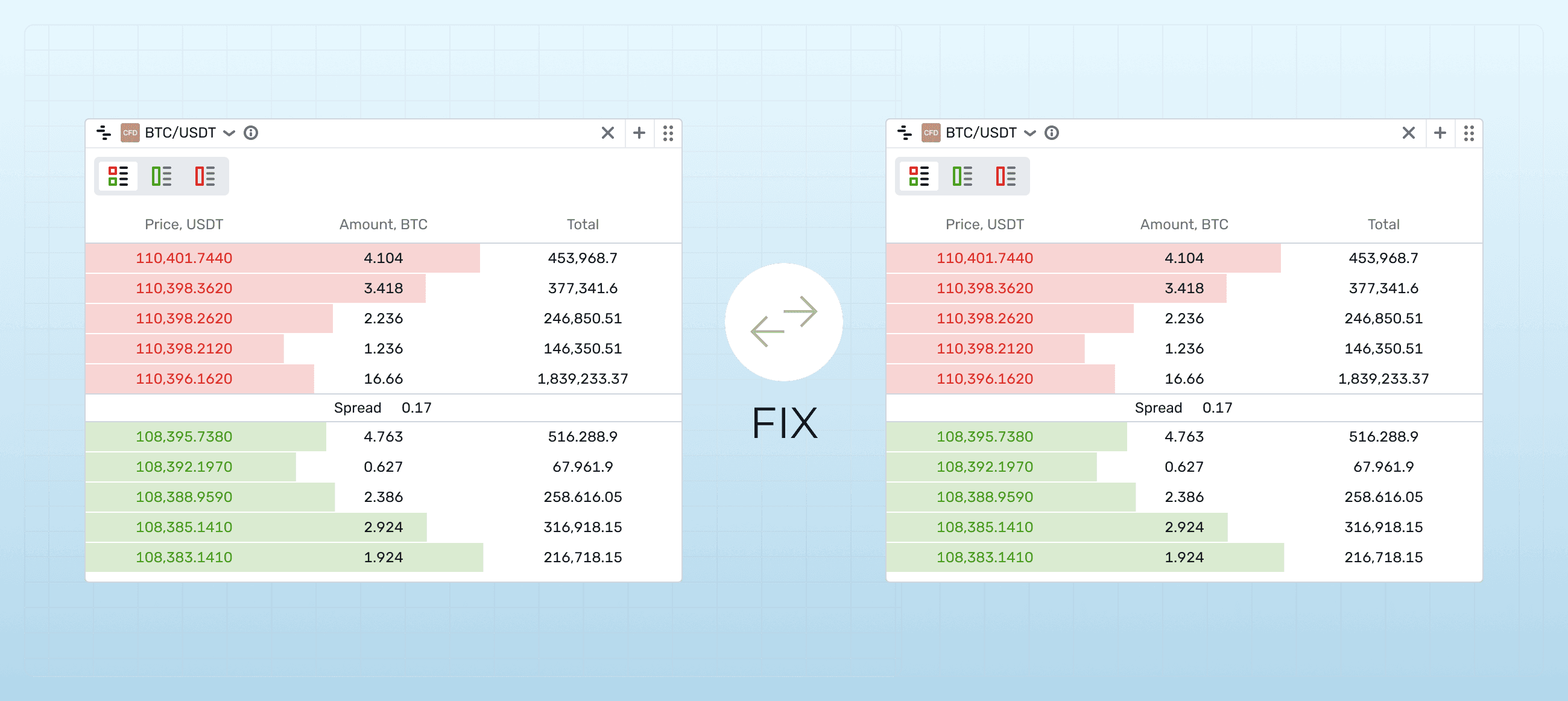
The internal order book handles orders placed within the B2TRADER, while external orders interact with liquidity providers under specific conditions. This system streamlines order processing, keeps traders’ activities transparent, and efficiently manages interactions with liquidity providers.

Vladimir Moshkov
Vladimir Moshkov
Vladimir Moshkov

Product Manager

How It works

How It works

Order Placement and Tracking

Retry Policy

Order Placement and Tracking

Internal Orders

Trader orders are first registered internally within the BP to manage initial order processing.

A/C-Book Execution

If using the A/C-Book model, orders are also placed in the external order book with the LP. Multiple external orders may be created based on attempts to fulfill the original order.

B-Book Execution

Executes solely within the BP, requiring no external interaction.
Price Stream

Order Placement and Tracking

Internal Orders

Trader orders are first registered internally within the BP to manage initial order processing.

A/C-Book Execution

If using the A/C-Book model, orders are also placed in the external order book with the LP. Multiple external orders may be created based on attempts to fulfill the original order.

B-Book Execution

Executes solely within the BP, requiring no external interaction.

Reliability and Maintenance

GTC, GTD, Day Limit Orders

Utilize a retry mechanism for LP interactions, avoiding potential loss of orders and ensuring reliability.

Market Orders

Not subject to retries due to rapidly changing market conditions.

TTL Settings

The combination of external (TTLe) and internal (TTLi) time settings defines how long the system waits for an LP response before retrying. If an order’s TTL expires without fulfillment and the price trigger remains valid, it is retried.

Order Placement and Tracking

Retry Policy

Order Placement and Tracking

Internal Orders

Trader orders are first registered internally within the BP to manage initial order processing.

A/C-Book Execution

If using the A/C-Book model, orders are also placed in the external order book with the LP. Multiple external orders may be created based on attempts to fulfill the original order.

B-Book Execution

Executes solely within the BP, requiring no external interaction.
Price Stream

Key Features

Key Features

Internal Order Book

Registers all orders placed by traders within the BP, recording their status and lifecycle.

Internal Order Book

Registers all orders placed by traders within the BP, recording their status and lifecycle.

Internal Order Book

Registers all orders placed by traders within the BP, recording their status and lifecycle.

External Order Book

Created when employing the A-Book model, these orders are executed through liquidity providers (LPs) and are not visible to traders.

External Order Book

Created when employing the A-Book model, these orders are executed through liquidity providers (LPs) and are not visible to traders.

External Order Book

Created when employing the A-Book model, these orders are executed through liquidity providers (LPs) and are not visible to traders.

Retry Policy

Ensures that orders potentially lost due to transmission errors are retried to secure successful execution with LPs for GTC, GTD, and Day Limit orders.

Retry Policy

Ensures that orders potentially lost due to transmission errors are retried to secure successful execution with LPs for GTC, GTD, and Day Limit orders.

Retry Policy

Ensures that orders potentially lost due to transmission errors are retried to secure successful execution with LPs for GTC, GTD, and Day Limit orders.

Execution guarantee

Execution guarantee
Execution guarantee
Execution guarantee

Efficient Order Management

Efficient Order Management

Distinguishing between internal and external orders allows for precise tracking and processing, enhancing execution efficiency.

Minimized Order Loss

Minimized Order Loss

The retry policy reduces the risk of losing orders due to technical failures, ensuring consistent execution quality.

Hedging Management

Hedging Management

According to the broker financial policy different order books allow to build correct interaction with LP and easily manage exposure and execution volume.

Enhanced Transparency

Enhanced Transparency

Clear delineation between internal and external order workflows offers administrators better visibility and understanding of execution processes.

Reliability

Reliability

The system’s ability to handle order retries instills confidence in the platform’s robustness and efficiency.

FREQUENTLY ASKED QUESTIONS

What is the difference between internal and external orders?

Internal orders are managed within the BP and applicable to all executions. External orders, created under the A/C-Book model, are fulfilled via liquidity providers.

What is the difference between internal and external orders?

Internal orders are managed within the BP and applicable to all executions. External orders, created under the A/C-Book model, are fulfilled via liquidity providers.

What is the difference between internal and external orders?

Internal orders are managed within the BP and applicable to all executions. External orders, created under the A/C-Book model, are fulfilled via liquidity providers.

How does the retry policy work?

How does the retry policy work?

How does the retry policy work?

Why are market orders not retried?

Why are market orders not retried?

Why are market orders not retried?

What happens if an order's TTL expires without execution?

What happens if an order's TTL expires without execution?

What happens if an order's TTL expires without execution?

What is the significance of the TTL?

What is the significance of the TTL?

What is the significance of the TTL?

© B2TRADER 2025 All Rights Reserved.

© B2TRADER 2025 All Rights Reserved.

© B2TRADER 2025 All Rights Reserved.